
ALOVECIENCIA
Become a spectroscopist...
On Thursday 26th Octover, 2023, took place the first AloveCIENCIA talk at the Conference Hall of the Library of Alovera.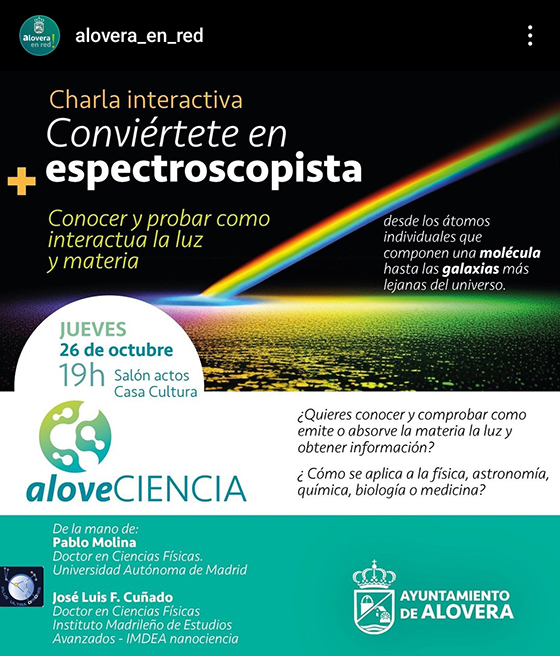 Zoom
Zoom
Spectroscopy, the branch of science that studies the interaction between light and matter, has developed over the centuries with the aim of analysing and understanding our environment. Starting with the use of natural light sources, such as the sun or fire, along with the development of the first optical instruments, we have been able to study the physical and chemical properties of the objects around us. The technique has been improved over years, and today, through the development of laser light sources and modern detectors, we are able to explore the world at all scales using spectroscopic techniques: from the individual atoms that make up a molecule to the most distant galaxies in the universe. In this presentation we will make a brief introduction to the main properties of light (more precisely, electromagnetic radiation) and the parameters that characterize it. Later we will describe the bases of spectroscopy, some of the techniques on which it is based and the most used instruments. In a theoretical and practical way we will explain how, by analysing the light that matter emits or absorbs, we are capable to obtain information related to its temperature, composition or the distance at which it is from us, among others. These characteristics make spectroscopy a cornerstone in many scientific disciplines such as physics, chemistry, biology or medicine.
Included in the Alovera's CULTURAL PASSPORT
The day of the talk
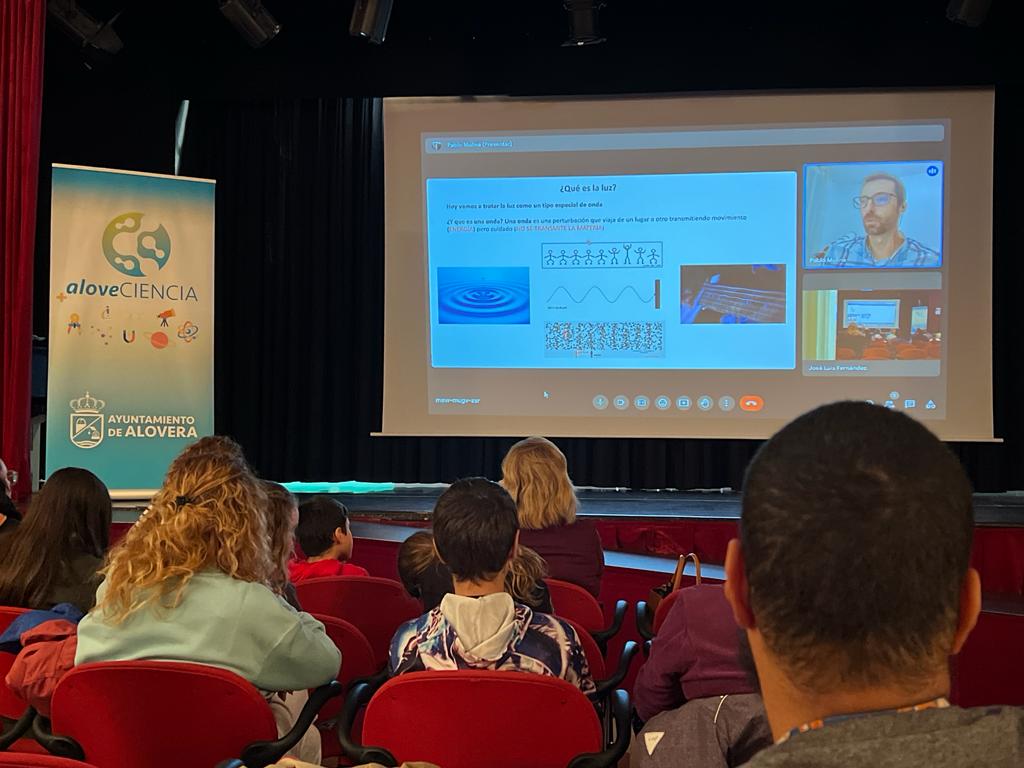
This spectroscopy talk was led by Pablo, followed by the question session and hands-on led by José Luis.
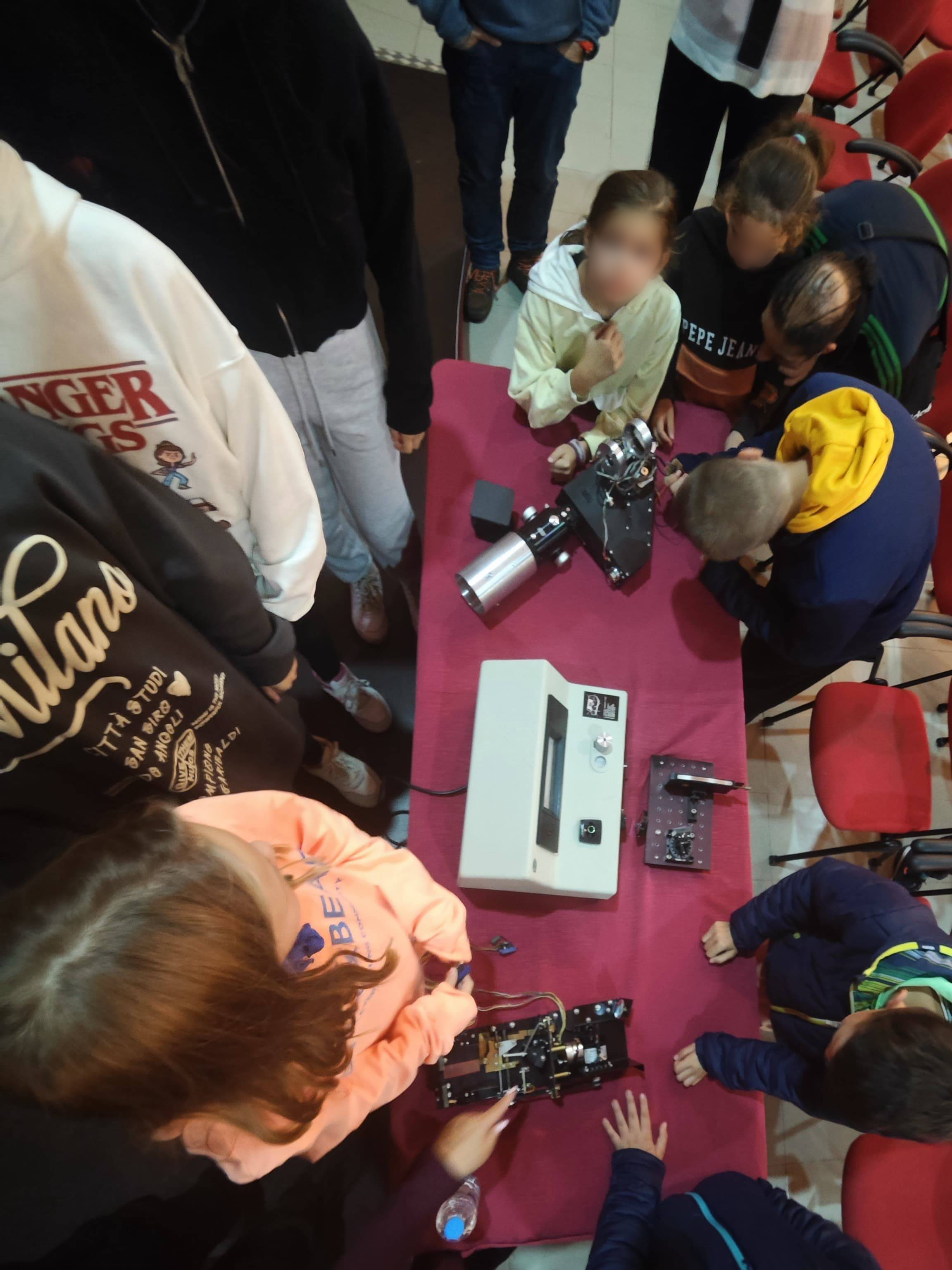
Various demonstration and real devices were shown during the event, including antique apparatus, modern compact spectroscopes, simple on-purpose demonstration apparatus and diffraction gratings.
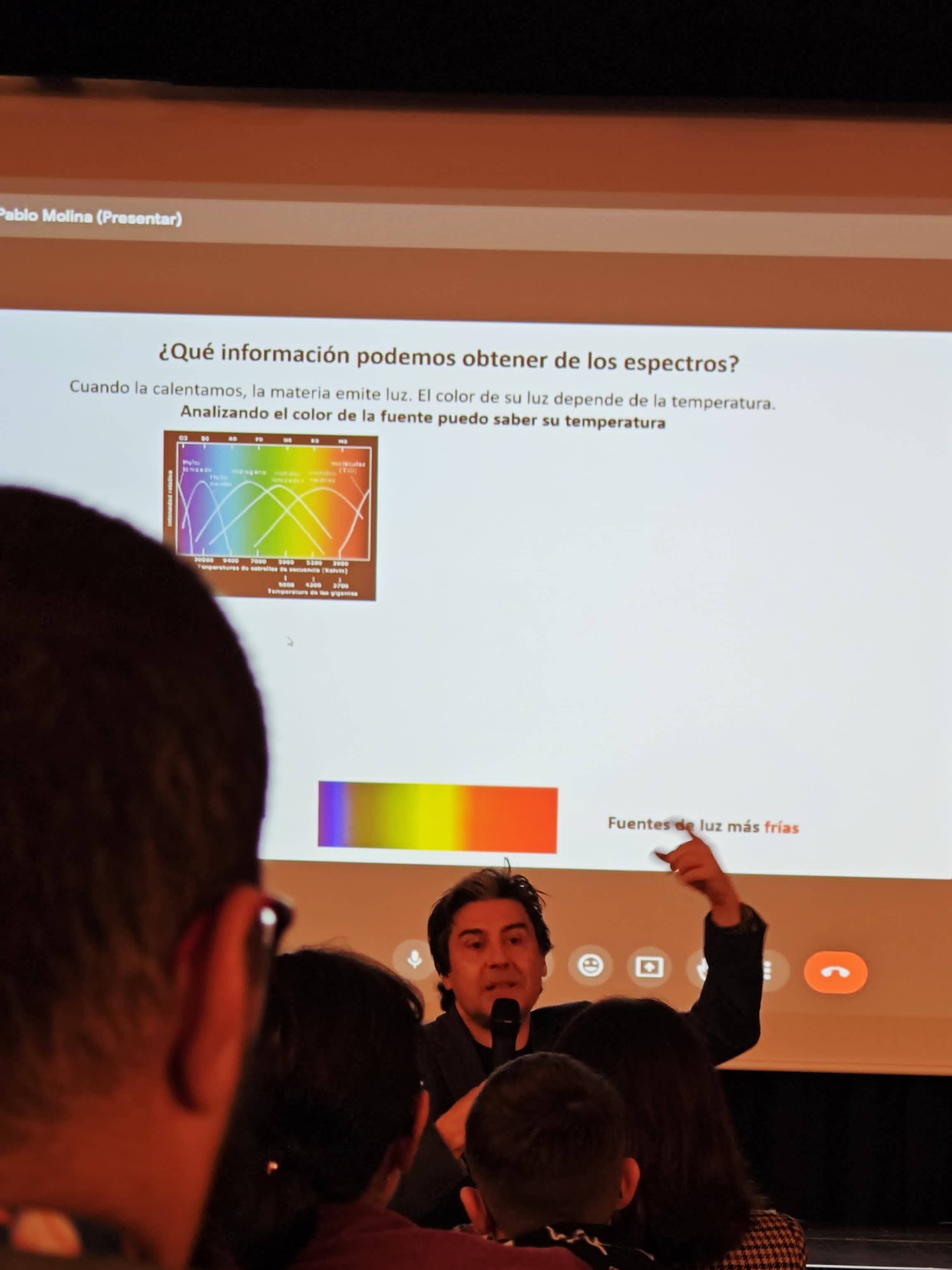
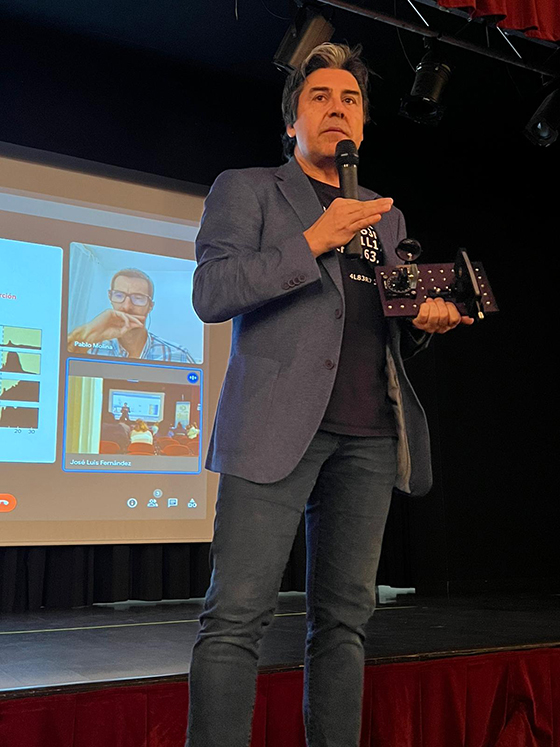
During the presentation, Pablo Molina explained basic concepts of light waves, light dispersion, spectroscopy, through a pleasant and accessible set of slides adapted to all audiences. He explained how each chemical species presents its own spectroscopic fingerprint that allows its identification, and how spectroscopy is one of the most widespread experimental techniques in all scientific fields.
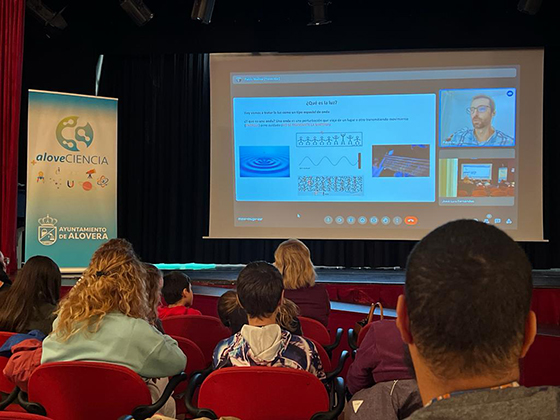
After the presentation, José Luis took over for the question session and the "hands-on" with the experiments. The audience asked very interesting questions that allowed us to expand even further on the concepts presented by Pablo.
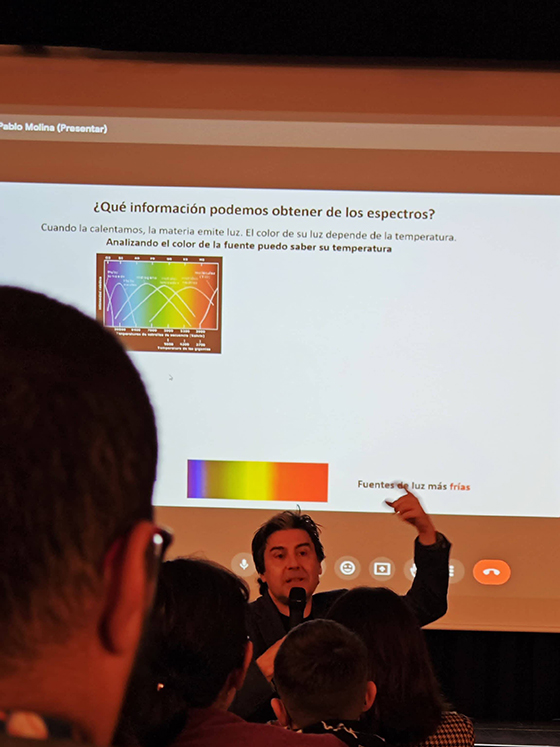
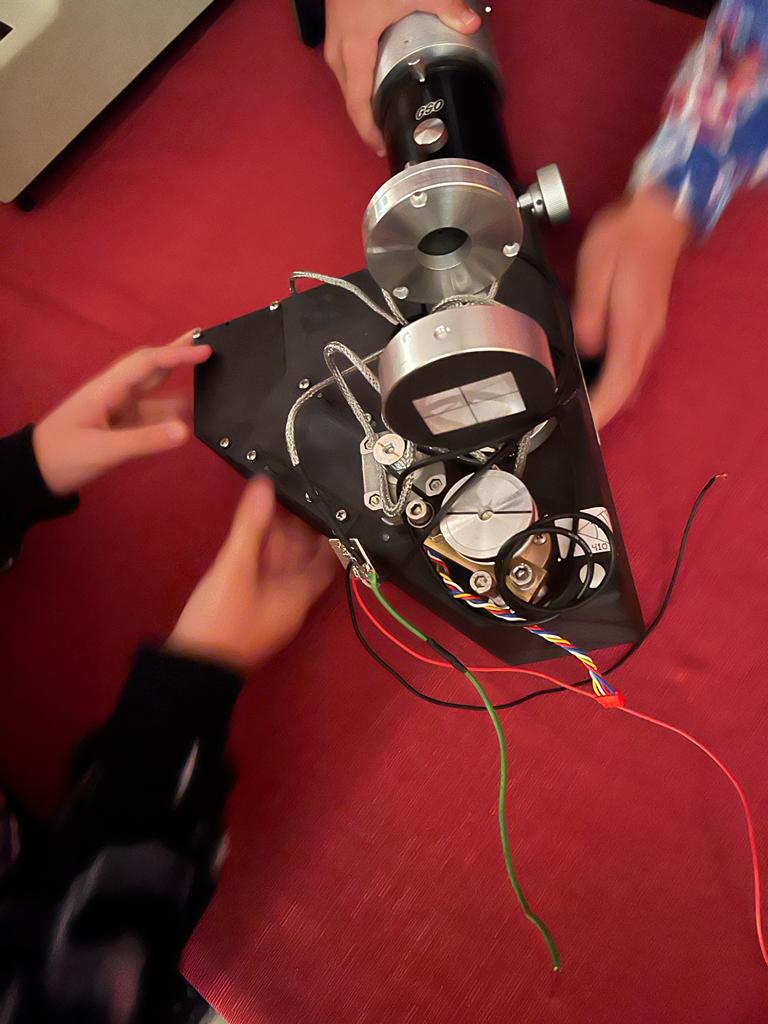
A series of devices were put in hands of the audience: they were "touch" and used in a "hands-on" experience, a very practical and fun way to understand the aforementioned spectroscopic concepts. All the devices that were shown could be closely examined by the public, thus having an experience very close to the reality of scientific experimentation. In the image below, a solar spectrometer built by José Luis.
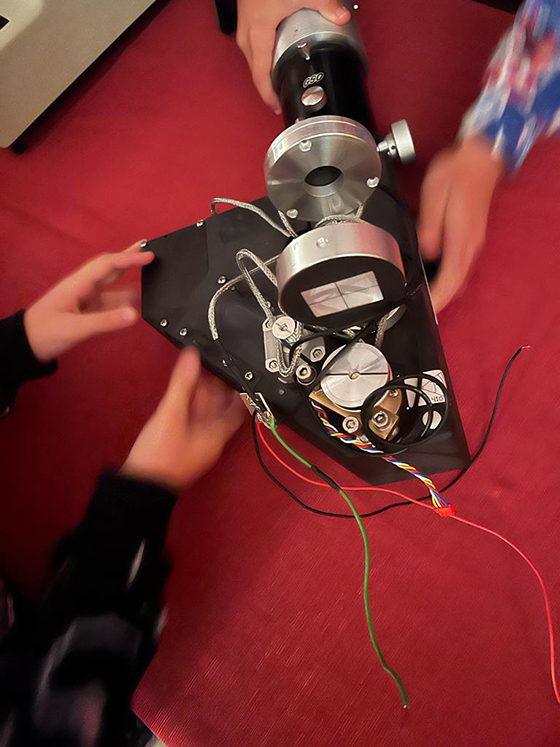
The children and adults fearlessly "touched" the devices, and were able to see how they worked up close. They understood how a physical principle is transferred into practical machines capable of exploiting it for research.
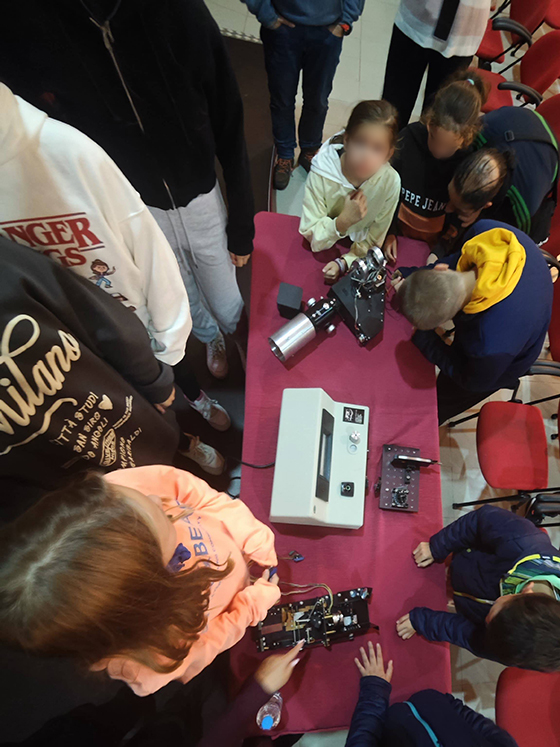
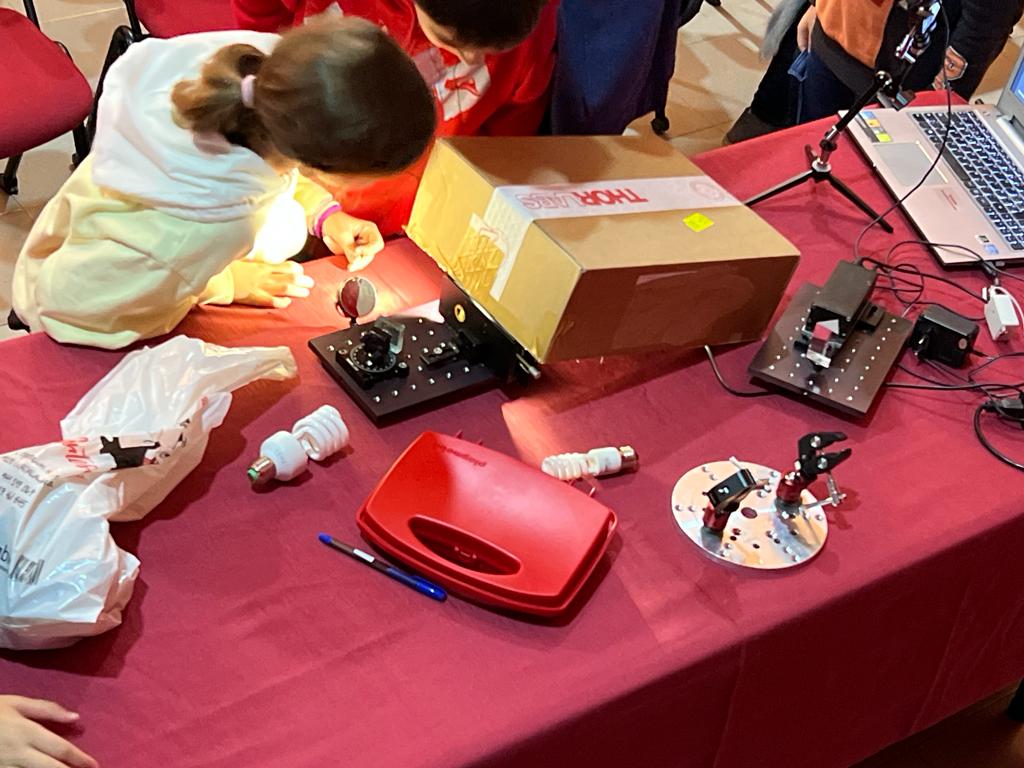
A direct experimentation, where the public could see with their own eyes emission spectra of different light sources. The magic of observing spectral lines is a unique experience. It is possible that in front of this table we already have a future Nobel Prize in physics...
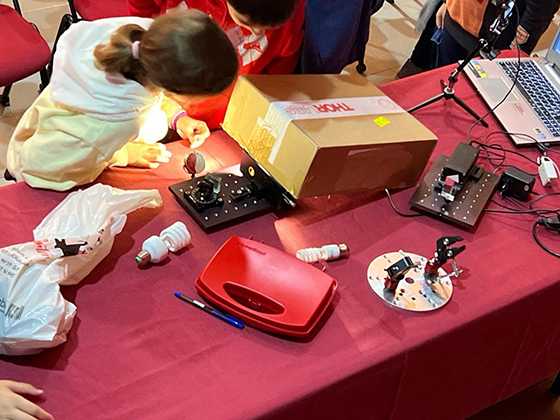
With the help of a compact spectrophotometer we showed the quantitative aspects of spectroscopy: the observed lines were compared with the known (tabulated) lines and the audience could see how real is what they see with their own eyes.
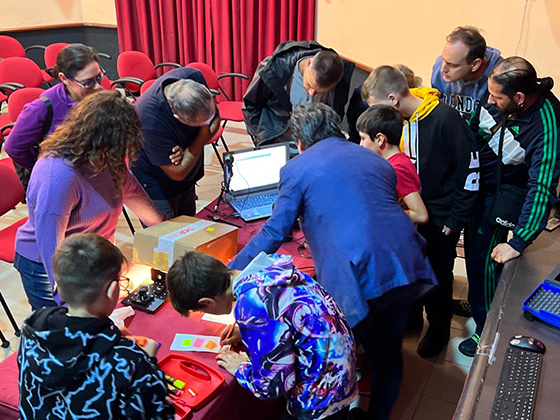
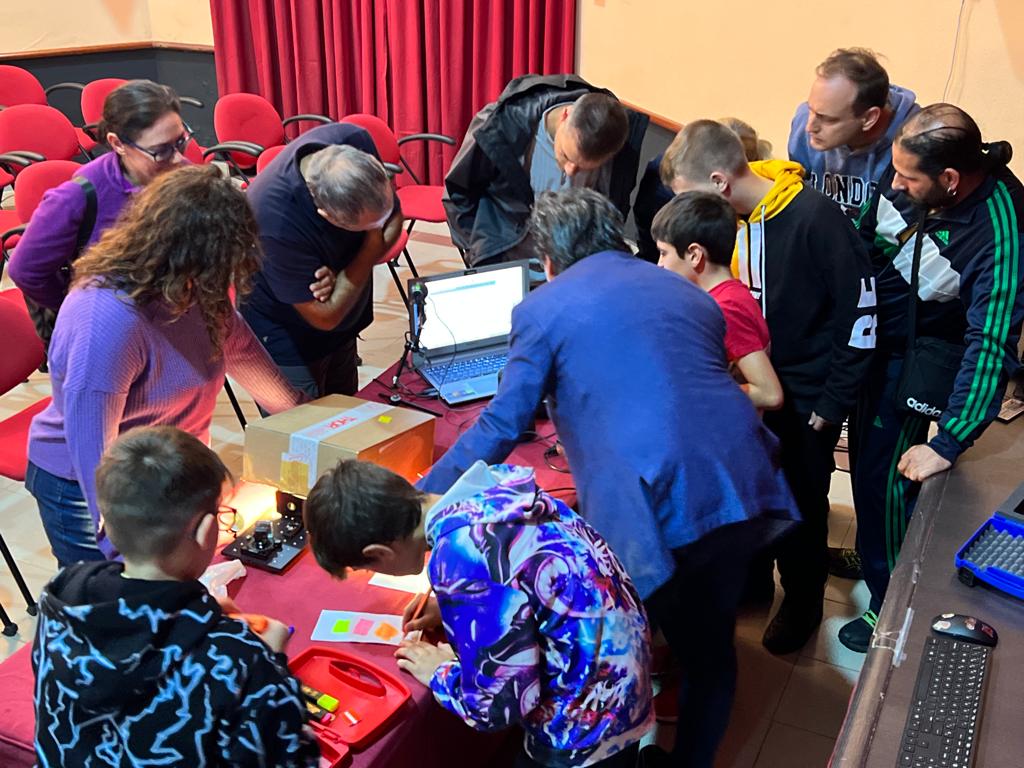
A moment from the "hands-on" presentation where, with the help of a simple spectrometer manufactured for the occasion, we encouraged the public to come and experiment.
-
 ............
............
...........
............
............
............
...........